| |
Date |
Event(s) |
| 1 | 1704 | - 1704: Penal Code enacted
- 13 Aug 1704: Battle of Blenheim
|
| 2 | 1705 | - 1705: First workable steam pumping engine devised by Thomas Newcomen (some say c1710
or 1711)
- 1705: Isaac Newton knighted (for his work at the Royal Mint)
|
| 3 | 1706 | - 1706: First evening newspaper "The Evening Post" issued in London
|
| 4 | 1707 | - 16 Jan 1707: Union with Scotland
- 1 May 1707: English and Scottish Parliaments united by an Act of the English Parliament
|
| 5 | 1708 | - 1708: First Jacobite rising in Scotland
- 1708: Earliest Artillery Muster Rolls
|
| 6 | 1709 | - 1709: Second Eddystone lighthouse completed
- 1709: First Copyright Act pass
- 1709: Bad harvests throughout Europe
- 2 Feb 1709: Alexander Selkirk rescued from shipwreck on a desert island, inspiring the book
Robinson Crusoe (published in 1719) by Daniel Defoe
|
| 7 | 1710 | - 1710: Tax on Apprentice Indentures introduced
|
| 8 | 1711 | - 1711: Incorporation of South Sea Company, in London
- 11 Aug 1711: First race meeting at Ascot
|
| 9 | 1712 | - 1712: Imposition of Soap Tax (abolished 1853)
- 1712: Last trial for witchcraft in England (Jane Wenham)
- 1712: Toleration Act passed
|
| 10 | 1713 | - 1713: By this year there are some 3,000 coffee houses in London
|
| 11 | 1714 | - 1714: Longitude Act: prize of
- 1714: Schism Act, prevents Dissenters from being schoolmasters in England
- 1714: Landholders forced to take the Oath of Allegiance and renounce Roman Catholicism
- 1 Aug 1714: Queen Anne Stuart dies
|
| 12 | 1715 | - 1715: Second Jacobite rebellion in Scotland, under the Old Pretender ('The Fifteen')
- 1 Aug 1715: Riot Act passed
|
| 13 | 1716 | - 1716: The Septennial Act of Britain leads to greater electoral corruption
- 1716: Climate: Thames frozen so solid that a spring tide lifted the ice bodily 13ft without
interrupting the frost fair
|
| 14 | 1717 | - 1717: First Masonic Lodge opens in London
- 1717: Value of the golden guinea fixed at 21 shillings
|
| 15 | 1719 | - 1719: Third abortive Jacobite rising
|
| 16 | 1720 | - 1720: South Sea Bubble, a stock-market crash on Exchange Alley
- 1720: Manufacturing towns start to increase in population
- 1720: Wallpaper becomes fashionable in England
|
| 17 | 1721 | - 2 Apr 1721: Robert Walpole (Whig) becomes first Prime Minister (to 1742)
- 4 Apr 1721—11 Feb 1742: Sir Robert Walpole, 1st UK Prime Minister (Whig)
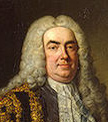
Sir Robert Walpole
|
| 18 | 1722 | - 1722: Last trial for witchcraft in Scotland
- 1722: Knatchbull's Act, poor laws
|
| 19 | 1723 | - 1723: Excise tax levied for coffee, tea, and chocolate
- 1723: The Waltham Black Acts add 50 capital offences to the penal code
- 1723: The Workhouse Act or Test
|
| 20 | 1724 | - 1724: Rapid growth of gin drinking in England
- 1724: Longman's founded (Britain's oldest publishing house)
|
| 21 | 1726 | - 1726: First circulating library opened in Edinburgh
- 1726: Invention of the chronometer by John Harrison
|
| 22 | 1727 | - 1727: Board of Manufacturers established in Scotland
- 11 Jun 1727: George I dies
|
| 23 | 1729 | - 9 Nov 1729: Treaty of Seville signed between Britain, France and Spain
|
| 24 | 1730 | |
| 25 | 1731 | - 1731: Invention of seed drill by Jethro Tull [others say 1701]
- 1731: Invention of sextant by John Hadley
|
| 26 | 1732 | - 7 Dec 1732: Covent Garden Opera House opens
|
| 27 | 1733 | - 1733: Excise crisis: Sir Robert Walpole wanted to add excise tax to tobacco and wine
- 1733: Law forbidding the use of Latin in parish registers generally obeyed
- 1733: John Kay invents the flying shuttle, revolutionised the weaving industry
|
| 28 | 1734 | - 1734: Kent's Directory published
|
| 29 | 1737 | - 1737: Licensing Act restricts the number of London theatres and subects plays to censorship
of the Lord Chamberlain (till 1950s)
|
| 30 | 1738 | - 24 May 1738: John Wesley has his conversion experience
|
| 31 | 1739 | - 1739: Wesley and Whitefield commence great Methodist revival
- 7 Apr 1739: Dick Turpin, highwayman, hanged at York
- 23 Oct 1739: War of Jenkins' Ear starts: Robert Walpole reluctantly declares war on Spain
|
| 32 | 1741 | - 1741: Benjamin Ingham founded the Moravian Methodists or Inghamites
|
| 33 | 1742 | |
| 34 | 1743 | - 16 Jun 1743: (June 27 in Gregorian calendar): Battle of Dettingen
- 27 Aug 1743—6 Mar 1754: Henry Pelham, UK Prime Minister (Whig)

Henry Pelham
|
| 35 | 1744 | - 1744: Tune 'God Save the King' makes its appearance
|
| 36 | 1745 | - 1745: Jacobite rebellion in Scotland ('The Forty-five')
- 19 Aug 1745: Bonnie Prince Charlie (The Young Pretender) lands in the western Highlands
|
| 37 | 1746 | - 16 Apr 1746: Battle of Culloden
|
| 38 | 1747 | - 1747: Abolition of Heritable Jurisdictions in Scotland
- 1747: Act for Pacification of the Highlands
|
| 39 | 1749 | - 1749: Windsor, Ontario
An agricultural settlement is founded in what is now Windsor, Ontario
- 1749: Halifax, Canada
Halifax is founded
- 27 Apr 1749: First performance of Handel's Music for the Royal Fireworks (in Green Park,
London)
|
| 40 | 1750 | - 1750: Canada,German
German Settlers arrive in Halifax
- Feb 1750: Series of earthquakes in London and the Home Counties cause panic with
predictions of an apocalypse (Feb/Mar)
- 16 Nov 1750: Original Westminster Bridge opened (replaced in 1862 due to subsidence)
|
| 41 | 1751 | - 1751: Halifax, Printing
Bartholomew Green established Canada'a first printing press in Halifax
- Mar 1751: Chesterfield's Calendar Act passed
|
| 42 | 1752 | - 1752: Benjamin Franklin invents the lightning conductor
- 1 Jan 1752: Beginning of the year 1752 [Scotland had adopted January as the start of the year
in 1600, and some other countries in Europe had adopted the Gregorian calendar as early as
1582]
- 3 Sep 1752: Julian Calendar dropped and Gregorian Calendar adopted in England and
Scotland, making this Sep 14
|
| 43 | 1753 | - 1753: Private collection of Sir Hans Sloane forms the basis of the British Museum
- 1 May 1753: Publication of "Species Plantarum" by Linnaeus, and the formal start date of plant
taxonomy
|
| 44 | 1754 | - 1754: Hardwicke Act (1753): Banns to be called, and Printed Marriage Register forms to be
used
- 1754: In the General Election, the Cow Inn at Haslemere, Surrey caused a national scandal by
subdividing the freehold to create eight votes instead of one
- 1754: First British troops not belonging to the East India Company despatched to India
- 1754: The French and Indian War
- 16 Mar 1754—16 Nov 1756: Thomas Pelham-Holles, 1st Duke of Newcastle, UK Prime Minister (Whig)
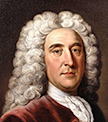
Thomas Pelham-Holles, 1st Duke of Newcastle
|
| 45 | 1755 | - 1755: Publication of "Dictionary of the English Language" by Dr Samuel Johnson
- 1755: Period of canal construction began in Britain (till 1827)
- 1755: The expulsion of the French Canadians by the British
- 1755: Canada, Post Office
The first Post Office is opened in Halifax
- 2 Dec 1755: Second Eddystone Lighthouse destroyed by fire
|
| 46 | 1756 | - 15 May 1756: The Seven Years War with France (Pitt's trade war) begins
- Jun 1756: Black Hole of Calcutta
- 16 Nov 1756—25 Jun 1757: William Cavendish, Duke of Devonshire, UK Prime Minister (Whig)

William Cavendish Duke of Devonshire
|
| 47 | 1757 | - 1757: The foundation laid for the Empire of India
- 1757: Canada
Henry Evans is the first architect in English Canada
- 14 Mar 1757: Admiral Byng shot at Portsmouth for failing to relieve Minorca
- 23 Jun 1757: The Nawab of Bengal tries to expel the British, but is defeated at the battle of
Plassey (Palashi, June 23)
- 2 Jul 1757—26 May 1762: Thomas Pelham-Holles, 1st Duke of Newcastle, UK Prime Minister (Whig)
Thomas Pelham-Holles, 1st Duke of Newcastle
|
| 48 | 1758 | - 1758: India stops being merely a commercial venture
- 2 Oct 1758: Canada Parliament
First Parliament elected in Canada
|
| 49 | 1759 | - 1759: Wesley builds 356 Methodist chapels
- 15 Jan 1759: British Museum opens to the public in London
- 16 Oct 1759: Third Eddystone Lighthouse (John Smeaton's) completed
|





 1704 - 1759 (54 years)