| |
Date |
Event(s) |
| 1 | 1596 | - 1596—1692: Spain - Plague
Spain Plague
|
| 2 | 1600 | - 1600—1650: South America - malaria
Desease Malaria
|
| 3 | 1628 | - 1 Mar 1628: Writs issued by Charles I that every county in England (not just seaport towns)
pay ship tax by this date
|
| 4 | 1629 | |
| 5 | 1630 | |
| 6 | 1633 | - 1633: Thirteen Colonies Plague
The Thirteen Colonies were the British Colonies on the Atlantic coast of North America founded between 1607 (Virginia) and 1733 (Georgia) that joined together to declare independence in 1776. The Plymouth Colony had a plague of Smallpox.
- Jun 1633: Galileo summoned by Inquisition for publishing in favour of Copernican theory
|
| 7 | 1634 | - 1634: Thirteen Colonies Plague
The Thirteen Colonies were the British Colonies on the Atlantic coast of North America founded between 1607 (Virginia) and 1733 (Georgia) that joined together to declare independence in 1776. The Connecticut River Colony had a plague of Smallpox.
|
| 8 | 1635 | - 1635: Letter Office of England & Scotland started
- 1635: Flintlock small arms invented around this time (replaces matchlock)
|
| 9 | 1636 | - 1636: Hackney Carriages in use by now in London
- 1636: England-New Castle Plague
New Castle, England Disease: Plague
|
| 10 | 1638 | - 1638: King Charles regarded protests against the prayerbook as treason
|
| 11 | 1639 | - 1639: Act of Toleration in England established religious toleration
|
| 12 | 1640 | - 3 Nov 1640: Charles I forced to recall Parliament (the 'Long Parliament') due to Scottish
invasion
|
| 13 | 1641 | - 1641: Charles I's policies cause insurrection in Ulster and Civil War in England
- 1641: Charles I and the English Parliament acknowledge the Prebyterian Church in Scotland
- 1641—1644: China Plague
The Chinese Disease Plague helped end the Ming Dynasty
- 23 Oct 1641: 50,000 Irish killed in an uprising in Ulster
|
| 14 | 1642 | - 1642: The Civil War interrupted the keeping of parish registers
- 1642: English theatres closed by Puritans (till 1660)
- 22 Aug 1642: Charles I raises his standard at Nottingham
- 13 Nov 1642: Battle of Turnham Green
- 24 Nov 1642: Abel Janszoon Tasman discovers Van Diemen's Land (now Tasmania)
- 18 Dec 1642: Abel Janszoon Tasman first European to set foot in New Zealand
|
| 15 | 1643 | - 13 Dec 1643: Battle of Alton
|
| 16 | 1644 | - 29 Jun 1644: Battle of Cropredy Bridge
- 2 Jul 1644: Battle of Marston Moor, near York
|
| 17 | 1645 | - 1645: Battle of Philiphaugh in Scotland
- 1645: Scotland: Each county and burgh ordered to raise and maintain a number of foot
soldiers, according to population, to serve as militia
- 1645: Plague made its last appearance in Scotland
- 14 Jun 1645: Battle of Naseby: Parliament's New Model Army crushes the Royalist forces
|
| 18 | 1646 | - 5 May 1646: Charles I surrenders to the Scottish Army at Newark
- 20 Jun 1646: Royalists sign articles of surrender at Oxford
|
| 19 | 1647 | |
| 20 | 1648 | - 1648: Society of Friends (Quakers) founded by George Fox
- 1648: First practical thermometers made
- 1648: South American Plague
South America Disease: Yellow fever
|
| 21 | 1649 | - 1649: Cromwell's Irish campaign starts
- 1649: King Charles II proclaimed King of Scots and England in Scotland
- 6 Jan 1649: 'Rump' Parliament votes to put Charles I on trial
- 30 Jan 1649: King Charles I executed
- 19 May 1649: Commonwealth declared
- 20 Dec 1649: Theatres banned by Cromwell
- 20 Dec 1649: Christmas banned by Cromwell
|
| 22 | 1650 | - 1650: Coffee brought to England about this time
|
| 23 | 1651 | - 1651: The second English Civil War (1651-1652)
- 1651: Scottish prisoners transported to the British settlements in America
- 3 Sep 1651: Battle of Worcester
|
| 24 | 1653 | - 1653: Commonwealth registers start
- 1653: Under the Act of Settlement Cromwell's opponents stripped of land
- 1653: Provincial probate courts abolished
- 20 Apr 1653: Cromwell dissolves the Rump Parliament
- 16 Dec 1653: Oliver Cromwell becomes Lord Protector of the Commonwealth of England,
Scotland and Ireland
|
| 25 | 1656 | - 1656: Italy- Naples Plague
Naples Plague in Italy Disease: Plague
|
| 26 | 1657 | |
| 27 | 1658 | - 1658: Richard Cromwell (son of Oliver) Lord Protector (-1660)
- 3 Sep 1658: Death of Oliver Cromwell
|
| 28 | 1659 | - 1659: Start of national meteorological Temperature records in the UK
- 6 Feb 1659: Date of first known bank cheque to be drawn
|
| 29 | 1660 | - 1660: Commonwealth registers ended, Parish Registers resumed
- 1660: Provincial Probate Courts re-established
- 1660: Clarendon code restricts Puritans' religious freedom
- 1660: Composition of light discovered by Newton
- 1660: Honourable East India Company founded by British
- 1 Jan 1660: Samuel Pepys starts his diary
- 29 May 1660: Restoration of British monarchy (Charles II)
- 17 Oct 1660: Ten Regicides are executed at Charing Cross or Tyburn
- 28 Nov 1660: Twelve men, including Christopher Wren, Robert Boyle, John Wilkins, and Sir
Robert Moray decide to found what is later known as the Royal Society
- 8 Dec 1660: First actress plays in London (Margaret Hughes as Desdemona)
|
| 30 | 1661 | - 1661: Restoration of Episcopacy in Scotland
- 1661: Board of Trade founded in London
- 1661: Hand-struck postage stamps first used
- 1661: Corporation Act prevents non-Anglicans from holding municipal office
- 30 Jan 1661: Oliver Cromwell formally 'executed', having been dead for over two years!
|
| 31 | 1662 | - 1662: 'Hearth Tax' introduced
- 1662: Poor Relief Act or "Act of Settlement"
- 1662: Tea introduced to Britain
- 24 Aug 1662: Act of Uniformity
|
| 32 | 1663 | |
| 33 | 1664 | - 29 May 1664: Oak Apple Day
- 27 Aug 1664: Nieuw Amsterdam becomes New York as 300 English soldiers under Col.
Mathias Nicolls take the town from the Dutch under orders from Charles II. The town is
renamed after the King's brother James, Duke of York
|
| 34 | 1665 | - 1665: Great Plague of London (July-October) kills over 60,000
- 1665: Five-mile Act restricts non-conformist ministers in Britain
- 7 Nov 1665: The "London Gazette" first published
|
| 35 | 1666 | - 1666: Use of semaphore signalling pioneered by Lord Worcester
- 1666: Newton formulated Laws of Gravity
- 2 Sep 1666: Great Fire of London, after a drought beginning 27 June (2-6 Sep)
|
| 36 | 1668 | - 1668: British East India Company obtains control of Bombay
- 1668: Newton constructs reflecting telescope
|
| 37 | 1669 | - 31 May 1669: Last entry in Pepys's diary
|
| 38 | 1670 | - 2 May 1670: Canada
Hudson's Bay Company is founded by the British
- 26 May 1670: King Charles II and King Louis XIV of France sign the Secret Treaty of Dover
|
| 39 | 1671 | - 9 May 1671: Thomas Blood caught stealing the Crown Jewels
|
| 40 | 1672 | - 1672: High Court of Justiciary established in Scotland
- 1672: War with Holland (to 1674)
- 1672: Canada
New France expands in to Canada
|
| 41 | 1673 | - 1673: First Test Act deprives British Catholics and Non-conformists of Public Office
|
| 42 | 1674 | - 10 Nov 1674: Treaty of Westminster
|
| 43 | 1675 | - 1675: Beginning of Whig party under Shaftsbury
- 1675: Rebuilding of St Paul's started by Wren (completed 1710)
- 4 Mar 1675: John Flamsteed appointed first Astronomer Royal of England
- 10 Aug 1675: Building of Royal Greenwich Observatory started
|
| 44 | 1676 | - 1676: Compton Census, named after its initiator Henry Compton, Bishop of London, was
intended to discover the number of Anglican conformists, Roman Catholic recusants and
Protestant dissenters in England and Wales from enquiries made in individual parishes
|
| 45 | 1677 | - 1677: Lee's "Collection of Names of Merchants in London" published
|
| 46 | 1678 | - 1678: Extension of Test Act to peers
|
| 47 | 1679 | - 1679: Tories first so named
- 27 May 1679: Habeas Corpus Act becomes law in England
|
| 48 | 1680 | - 1680: William Dockwra(y) begins his London Penny Post
- 1680: Dodo becomes extinct in Mauritius through over-hunting
|
| 49 | 1681 | - 1681: Second Test Act (against non-conformists) passed by Westminster Parliament
- 1681: Oil lighting first used in London streets
|
| 50 | 1682 | - 1682: Pennsylvania founded by William Penn
- 1682: Library of Advocates founded in Edinburgh
- 1682: Halley observes the comet which bears his name
|
| 51 | 1683 | - 1683: Wild boar become extinct in Britain
- 6 Jun 1683: Ashmolean Museum opened at Oxford
|
| 52 | 1685 | - 1685: James the Second (1685-1689, died 1701)
- 1685: Earl of Argyll's Invasion of Scotland
- 1685: Judge Jeffreys and the Bloody Assizes
|
| 53 | 1686 | - 1686: Release of all prisoners held for their religious beliefs
|
| 54 | 1687 | - 4 Apr 1687: James II issues the Declaration of Indulgence, suspending laws against Catholics
and non-conformists
- 5 Jul 1687: Newton published his "Philosophiae Naturalis Principia Mathematica"
|
| 55 | 1688 | - 1688: British Army raised to 40,000
- 1688: Bill of Rights limits the powers of the monarchy over parliament
- 1688: Hearth Tax abolished
- 1688: Mutiny Act
- Feb 1688: Edward Lloyd's Coffee House opens
- Nov 1688: The Glorious Revolution: James II abdicates
- 5 Nov 1688: William of Orange lands at Torbay
- Dec 1688: Siege of Londonderry (began Dec 1688; ended 28 Jul 1689)
|
| 56 | 1689 | - 1689: Devonport naval dockyard established
- 13 Feb 1689: William III and Mary II, daughter of James II, jointly take the throne (only William, however, has regal power)
- 12 Mar 1689: Deposed James VII & II flees to Ireland
- 24 May 1689: Toleration Act passed for Protestant non-conformists
- 27 Jul 1689: Battle of Killiecrankie in Scotland
- 16 Dec 1689: Bill of Rights passed by Parliament, ending King's divine right to raise taxes or
wage war
|
| 57 | 1690 | - 20 May 1690: England passes Act of Grace, forgiving Roman Catholic followers of James II
|
| 58 | 1692 | - 1692: Land Tax introduced
- 1692: French intention to invade England came to nothing
- 13 Feb 1692: The massacre of Glencoe
|
| 59 | 1693 | - 4 Aug 1693: Date traditionally ascribed to Dom Pierre P
|
| 60 | 1694 | - 1694: National Debt came into effect in England
- 1694: Stamp Duties introduced into Britain from Holland
- 1694: Mary II death leaves William III as sole ruler
- 1694: Triennial Act, new Parliamentary elections every three years
- 1694: Scotland: Poll Tax imposed on all over sixteen, except the destitute and insane (-1699)
- 27 Jul 1694: Bank of England founded by William Paterson (a Scot)
|
| 61 | 1695 | - 1695: Freedom of Press in England granted
- 1695: Bank of Scotland founded
- 1695: Act of Parliament imposes a fine on all who fail to inform the parish minister of the
birth of a child (repealed 1706)
- 1695: Start of "Dissenters" lists in parish registers
|
| 62 | 1697 | - 2 Dec 1697: Official opening of St Paul's Cathedral
|
| 63 | 1698 | - 1698: Invention of steam engine by Capt Thomas Savery
- 1698: Darien Expedition: a disastrous attempt to establish a Scots settlement in Panama
- 1698: Duties (taxes) on entries in parish registers
- 4 Jan 1698: Most of the Palace of Whitehall in London destroyed by fire
- 14 Nov 1698: Eddystone Lighthouse (Henry Winstanley's) first lit; completed 10 days earlier
|
| 64 | 1700 | - 1700: Population in England and Scotland approx 7.5 million
|
| 65 | 1701 | - 1701: Act of Settlement bars Catholics from the British throne
- 23 May 1701: After being convicted of piracy and murdering William Moore, Captain
William Kidd hanged in London
|
| 66 | 1702 | - 8 Mar 1702: Anne Stuart becomes Queen
- 11 Mar 1702: First English daily newspaper The Daily Courant (till 1735)
|
| 67 | 1703 | - 4 Aug 1703: British take Gibraltar
- 24 Nov 1703: Climate: Most violent storms of the millennium cause vast damage
across southern England
|
| 68 | 1704 | - 1704: Penal Code enacted
- 13 Aug 1704: Battle of Blenheim
|
| 69 | 1705 | - 1705: First workable steam pumping engine devised by Thomas Newcomen (some say c1710
or 1711)
- 1705: Isaac Newton knighted (for his work at the Royal Mint)
|
| 70 | 1706 | - 1706: First evening newspaper "The Evening Post" issued in London
|
| 71 | 1707 | - 16 Jan 1707: Union with Scotland
- 1 May 1707: English and Scottish Parliaments united by an Act of the English Parliament
|
| 72 | 1708 | - 1708: First Jacobite rising in Scotland
- 1708: Earliest Artillery Muster Rolls
|
| 73 | 1709 | - 1709: Second Eddystone lighthouse completed
- 1709: First Copyright Act pass
- 1709: Bad harvests throughout Europe
- 2 Feb 1709: Alexander Selkirk rescued from shipwreck on a desert island, inspiring the book
Robinson Crusoe (published in 1719) by Daniel Defoe
|
| 74 | 1710 | - 1710: Tax on Apprentice Indentures introduced
|
| 75 | 1711 | - 1711: Incorporation of South Sea Company, in London
- 11 Aug 1711: First race meeting at Ascot
|
| 76 | 1712 | - 1712: Imposition of Soap Tax (abolished 1853)
- 1712: Last trial for witchcraft in England (Jane Wenham)
- 1712: Toleration Act passed
|
| 77 | 1713 | - 1713: By this year there are some 3,000 coffee houses in London
|
| 78 | 1714 | - 1714: Longitude Act: prize of
- 1714: Schism Act, prevents Dissenters from being schoolmasters in England
- 1714: Landholders forced to take the Oath of Allegiance and renounce Roman Catholicism
- 1 Aug 1714: Queen Anne Stuart dies
|
| 79 | 1715 | - 1715: Second Jacobite rebellion in Scotland, under the Old Pretender ('The Fifteen')
- 1 Aug 1715: Riot Act passed
|
| 80 | 1716 | - 1716: The Septennial Act of Britain leads to greater electoral corruption
- 1716: Climate: Thames frozen so solid that a spring tide lifted the ice bodily 13ft without
interrupting the frost fair
|
| 81 | 1717 | - 1717: First Masonic Lodge opens in London
- 1717: Value of the golden guinea fixed at 21 shillings
|
| 82 | 1719 | - 1719: Third abortive Jacobite rising
|
| 83 | 1720 | - 1720: South Sea Bubble, a stock-market crash on Exchange Alley
- 1720: Manufacturing towns start to increase in population
- 1720: Wallpaper becomes fashionable in England
|
| 84 | 1721 | - 2 Apr 1721: Robert Walpole (Whig) becomes first Prime Minister (to 1742)
- 4 Apr 1721—11 Feb 1742: Sir Robert Walpole, 1st UK Prime Minister (Whig)
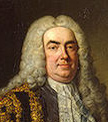
Sir Robert Walpole
|
| 85 | 1722 | - 1722: Last trial for witchcraft in Scotland
- 1722: Knatchbull's Act, poor laws
|
| 86 | 1723 | - 1723: Excise tax levied for coffee, tea, and chocolate
- 1723: The Waltham Black Acts add 50 capital offences to the penal code
- 1723: The Workhouse Act or Test
|
| 87 | 1724 | - 1724: Rapid growth of gin drinking in England
- 1724: Longman's founded (Britain's oldest publishing house)
|
| 88 | 1726 | - 1726: First circulating library opened in Edinburgh
- 1726: Invention of the chronometer by John Harrison
|
| 89 | 1727 | - 1727: Board of Manufacturers established in Scotland
- 11 Jun 1727: George I dies
|
| 90 | 1729 | - 9 Nov 1729: Treaty of Seville signed between Britain, France and Spain
|
| 91 | 1730 | |
| 92 | 1731 | - 1731: Invention of seed drill by Jethro Tull [others say 1701]
- 1731: Invention of sextant by John Hadley
|
| 93 | 1732 | - 7 Dec 1732: Covent Garden Opera House opens
|
| 94 | 1733 | - 1733: Excise crisis: Sir Robert Walpole wanted to add excise tax to tobacco and wine
- 1733: Law forbidding the use of Latin in parish registers generally obeyed
- 1733: John Kay invents the flying shuttle, revolutionised the weaving industry
|
| 95 | 1734 | - 1734: Kent's Directory published
|
| 96 | 1737 | - 1737: Licensing Act restricts the number of London theatres and subects plays to censorship
of the Lord Chamberlain (till 1950s)
|
| 97 | 1738 | - 24 May 1738: John Wesley has his conversion experience
|





 1628 -