The rise, fall and rebirth of Brakspear Brewery.
By the age of nineteen, Robert Breakspear was the landlord of the Cross Keys Inn at Witney in Oxfordshire. He stayed there for ten years, brewing (ales) for himself and for sale to other publicans in the town.
Robert's uncle, Richard Hayward, ran a brewery and malthouse in Bell Street, Henley. On his invitation around 1775, Breakspear moved there and quickly developed a flair for the business. From 1779, the company became known as "Brakspear". (Robert had changed the spelling of the family name from Breakspear to Brakspear (still pronounced "brake-spear") to distinguish himself from his father, who had died destitute and brought shame on the family.)
Two years later Robert became a partner in the brewery and on Hayward's death, his half share passed to Breakspear, who was able to buy out the remaining partner in 1803 and thus become sole propietor.
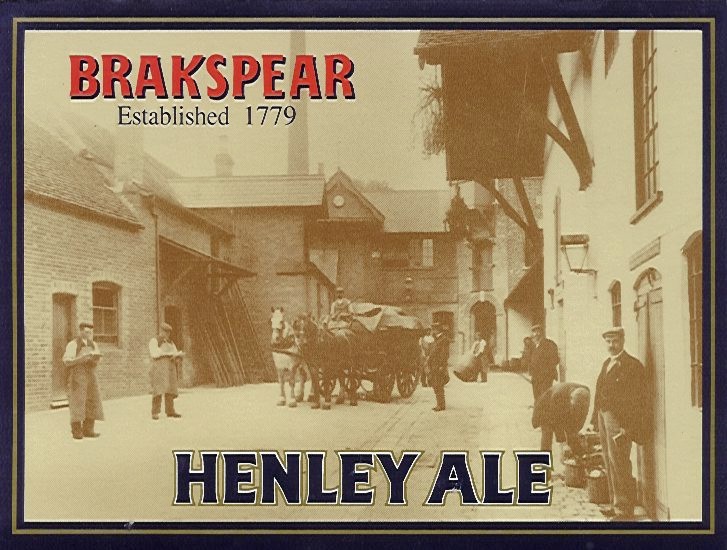
Robert was sufficiently proud of his beers that he invented a shorthand-like code to prevent rivals from stealing his recipes.
Robert's son, William Henry, after whom the brewery is now named (2002 - Ed.), took over when his father retired and served the brewery for 57 years. This tall, imposing, beak-nosed man was a remarkable Victorian entrepreneur who energetically turned Brakspear into a major brewing and pub-owning force in the Thames Valley. He used the river to bring supplies of grain and hops from London, and sent the boats back laden with casks of ale.
He left a flourishing company to his sons Archibald and George. Brakspear became a public company early in the 20th century, but the majority of stock is controlled by the family, with other stock owned by employees and retired members of staff who still live in the Henley area.
Entering the brewery is a journey back to Victorian England. There are wood-jacketed mash tuns, burnished copper kettles, and two storys of wooden fermenters. Brewing is a slow, ruminative, time-honored ritual, using only the finest ingredients.
Brakspear is so dedicated to quality that head brewer Peter Scholey uses Maris Otter barley, which is considered "low yielding" by seed merchants and farmers, who prefer more modern varieties that produce more grain per acre. But Maris Otter makes the finest and juiciest malting barley, one that works in perfect harmony with the house yeast.
Maris Otter has to be contract-grown by specialist farmers these days, but Mr Scholey is prepared to pay the premium for the best malt. He uses traditional Fuggles and Goldings hops from Kent and Worcestershire, with Styrian Goldings from Slovenia for their fine aroma.
The high point of the brewery is the unique "dropping system" of fermentation. Two banks of open-topped vessels are ranged above each other on two storys. Fermentation begins in the top vessels and, after a few days, the bases of the vessels are opened and the fermenting wort and yeast drop down to the vessels below.
The system aerates the yeast and leaves behind dead yeast cells. Fermentation continues with great vigor for several more days.
Brakspear is best known for its Bitter and Special Bitter, ales rich with juicy malt, fruit, and resiny and spicy hop character. To lose the brewery and these sublime beers would be a devastating blow. In Britain, CAMRA -- the Campaign for Real Ale -- has launched a major campaign to save Brakspear.
Extracted and edited from an article originally published by ProtzonBeer.com, 30 May 2002.
Addendum
Despite the efforts of CAMRA and others, Brakspear Brewery in Henley-on-Thames closed in 2002. However, Wychwood Brewery of Witney, Oxfordshire, bought much of the equipment and the rights to continue production. The acquisition and subsequent production of Brakspear beers is beautifully illustrated in a set of vidoes produced by Wychwood Brewery and available to view here.